
Navigating Regulatory and Compliance Frameworks in Public Procurement
Municipal purchasing agents and university supply chain directors face strict regulations. Enterprise facility managers also handle a highly regulated procurement process. Institutional purchasing demands legal compliance, social safety certifications, and material longevity. This process differs greatly from casual retail buying. Deploying substandard furniture into high-traffic public zones creates severe operational liabilities. School cafeterias, government examination halls, and corporate training facilities need reliable equipment to prevent structural failure risks and regulatory audit penalties.
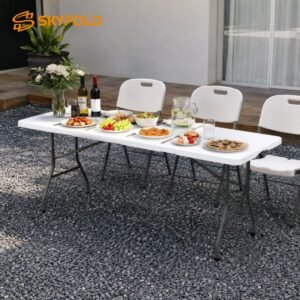
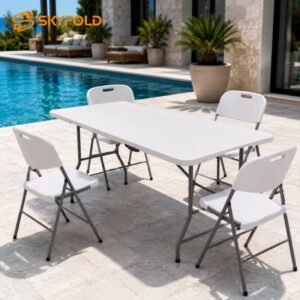
Vetting the manufacturer’s compliance profile is a mandatory first step. Do this before structuring a public tender or large-scale corporate contract for a 6ft plastic folding table fleet. Institutional buyers require heavy-duty industrial engineering. The furniture must endure continuous daily setup and teardown cycles without mechanical degradation. This comprehensive guide breaks down the essential international testing benchmarks, structural specifications, and supply chain risk mitigation protocols required to secure a successful institutional contract.
Essential Certifications for Government and Educational Audits
Public institutions and multinational corporations maintain strict vendor evaluation metrics. They completely reject unverified trading brokers. They also avoid low-tier workshops that operate without certified quality management infrastructure. Partnering with an established, fully audited hdpe folding table manufacturer ensures absolute safety. Your procurement documentation will pass municipal committee reviews and legal audits seamlessly on the first attempt.
A premier manufacturing infrastructure provides full legal and safety backing for high-volume public bids. First, the factory holds a certified ZRX Quality Management System compliant with GB/T19001-2015 and ISO9001:2015 standards. This setup ensures that all raw HDPE polymer batches and steel framing components undergo strict, standardized testing. Testing occurs from raw material arrival to final container sealing. Second, holding a valid Business Social Compliance Initiative (BSCI) audit report satisfies strict corporate social responsibility (CSR) requirements. Furthermore, comprehensive European EN581 data verifies mechanical safety and structural load thresholds for high-occupancy public environments.
Mechanical Integrity: Engineering a Safe Learning Environment
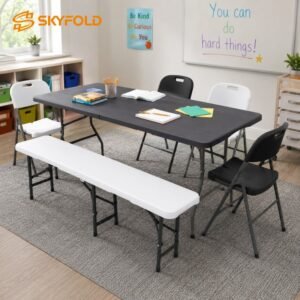
In educational and corporate training environments, tables must withstand intense daily physical abuse. Students drop heavy backpacks on the edges. They also lean heavily on the corners during collaborative group work. Facilities teams stack tables aggressively onto transport dollies during multi-purpose hall switchovers. To protect user safety and extend the equipment lifecycle, the structural frame must feature advanced mechanical reinforcement.
Premium institutional models integrate a heavy-duty 25×1.0mm steel tubing sub-frame to eliminate the risk of accidental leg collapse. This layout features a precision gravity-slide locking ring assembly. As deeply analyzed in our comprehensive technical guide regarding commercial folding tables weight capacity, a verified institutional-grade table must comfortably support a 150kg static load. It withstands continuous hydraulic pressure without displaying frame bowing or central hinge warping. Automated acid-wash phosphating protects this heavy-duty metal engineering. A baked-on electrostatic powder coating creates a highly durable finish that resists scratching, moisture, and rust bleeding.
Cross-Group Validation: Material Elasticity Under Severe Stress
The long-term durability of a public school or municipal table depends heavily on the polymer science of the tabletop surface. Sourcing managers must look beyond surface aesthetics. They need to evaluate the raw compound matrix. As deeply detailed in our manufacturing blueprint concerning the ideal hdpe folding table material formula, the polymer blend is critical. Combining 40% virgin HDPE with 60% high-grade recycled polymer yields an optimal balance of structural stiffness and impact flexibility.
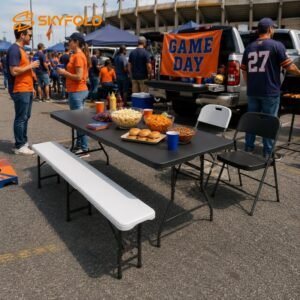
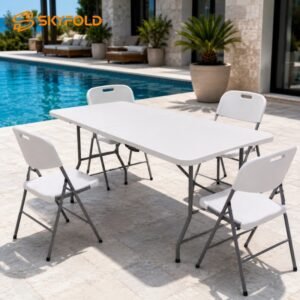
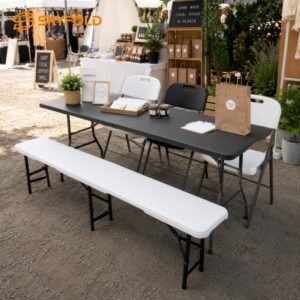
This specialized polymer matrix allows the blow-molded honeycomb panel to absorb violent localized impacts. For example, it protects the unit if a table falls off a storage rack. The panel flexes and disperses the shock energy instead of cracking. It will not shatter like brittle, cheap plastics. Furthermore, the factory integrates premium anti-UV masterbatch pigments directly into the extrusion line. This process prevents the material from yellowing, turning brittle, or degrading during outdoor school events. It performs perfectly during graduation ceremonies or municipal community markets, outlasting standard retail alternatives by multiple operational cycles.
Securing Fleet Volumes via Asset-Heavy Factory Scale
Fulfilling a regional university campus upgrade requires massive production capacity. Nationwide government department rollouts also demand high volume scalability. If a supplier delays delivery by even a single week, it can disrupt academic calendars. This delay triggers severe financial non-performance penalties for the distributor. These bottlenecks usually stem from metal raw material shortages or limited workshop lines. Sourcing executives must verify the physical asset scale of their manufacturing partner to guarantee supply chain continuity.
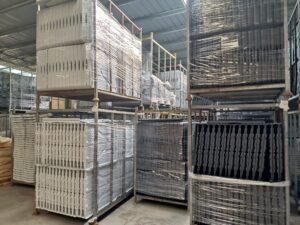
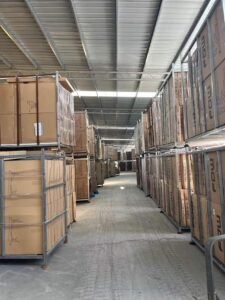
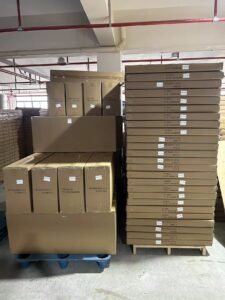
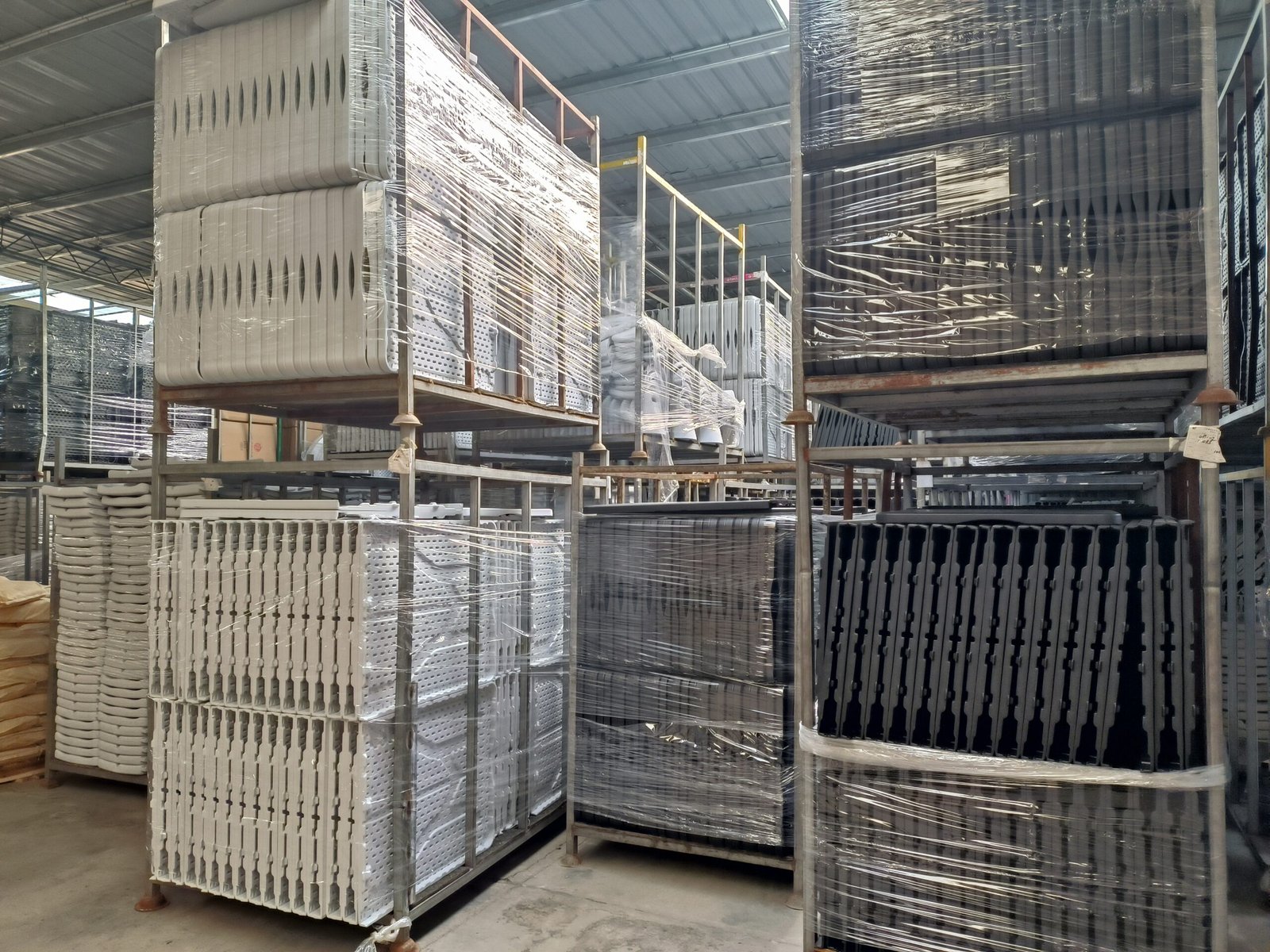
Leading distributors choose stable partners to eliminate delivery disruptions during critical procurement seasons. They select manufacturers with an established export history active since 2016. These partners often exceed 20 million USD in annual volume. Managing 2 self-owned factories with over 10,000 square meters of production space provides immense stability. Operating 6 automated lines yields a reliable monthly output of 150,000 tables. This massive infrastructure allows factories to maintain a reliable 25 to 30-day delivery window. It also supports flexible freight logistics, such as 20GP container trial runs or multi-SKU mixed container loading, as outlined in our 6ft plastic folding table sourcing guide.
Conclusion: Establishing an Auditable, Highly Efficient Supply Chain
Optimizing your institutional furniture procurement requires a strategic focus. Buyers must prioritize factory certification, robust frame engineering, and certified material load capacities. Shifting your organization’s inventory framework away from unverified brokers is essential. Choosing fully audited, automated manufacturing assets ensures your enterprise can fulfill large-scale public tenders. You can execute corporate facility upgrades without facing quality disputes, customs delays, or safety concerns.
Enforce these strict BSCI metrics and 25mm steel tubing standards during your next buying cycle. Implement ISTA-3A packaging protections to protect your procurement network from logistical volatility. Aligning your wholesale enterprise with an undisputed industry leader guarantees factory-direct pricing. It also ensures stable volume execution and premium material durability. These factors satisfy both strict government auditors and demanding school administrators. Establish your technical parameters today, confirm your certification compliance, and command your marketplace with the dependable utility your clients trust year after year.