
A supplier sends over an HDPE folding table specification sheet, and every line looks plausible. However, two sheets with near-identical numbers can describe very different tables. The difference sits in what each line actually covers, how the supplier measured it, and what stays off the page. This guide walks through a typical HDPE folding table specification line by line, so you can compare quotes on facts rather than on adjectives.
Dimensions: Read More Than the Length
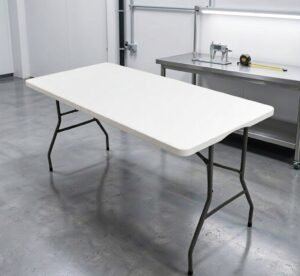
Most sheets open with unfolded dimensions, and a 6 ft model reads 180 × 74 × 74 cm — length, width, height. Yet the length tells only part of the story. If your customers run banquet halls, height also determines whether standard tablecloths drape correctly. First of all, confirm the unit and the order, because suppliers mix metric and imperial between markets. Secondly, check the folded height, since it decides how many units stack on a pallet and whether the table fits through standard doorways on a delivery route.
Tabletop Thickness and the HDPE Blend
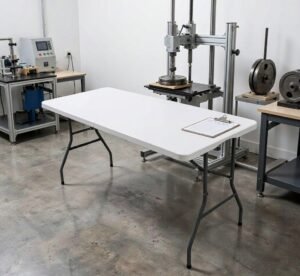
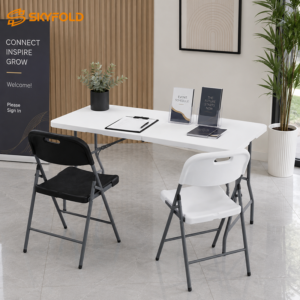
On a well-written sheet, thickness refers to the panel-and-frame assembly, not just the visible skin. SKYFOLD’s 6 ft line shows why this line matters: the SF-180 Standard carries a 3.5 cm top, the Custom Heavy model 3.7 cm, and the Premium versions 4.0 cm. All tops use blow-molded HDPE with an anti-slip texture, so cleaning takes one wet cloth. Furthermore, ask for the resin blend. Our panels combine 40% virgin and 60% recycled HDPE, which balances stiffness against cost; some suppliers skip this line entirely, and the blend explains most of the price gap between quotes.
Frame, Legs and Hardware: Where Tables Actually Fail
Look next at the leg section. A serious sheet lists tube diameter and wall thickness together — for example 25 × 1.0 mm seamless steel, with 22 × 1.0 mm tubes on lighter models. A bare “steel legs” entry means nothing. Consequently, ask how the factory treats the surface. SKYFOLD legs go through acid pickling and phosphating before electrostatic powder coating, a combination that resists rust through wet-storage seasons. Then check the hardware list: a lock clasp that holds the legs open, horseshoe-shaped buckles, and non-slip foot pads. Finally, the load line should state a static load of 150 kg or more, plus an operating range of roughly −60 °C to 80 °C,. For more detail on materials, see our HDPE folding table quality and frame specs guide.
Weight, Container Loading and Packaging
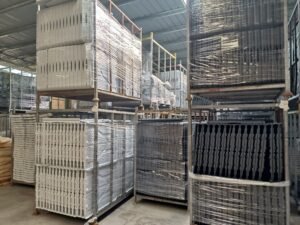
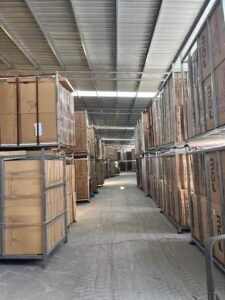
Weight lines reveal cost before prices do. A 6 ft table at 10.0 kg net and 10.5 kg gross ships differently from an 11.1 kg model, and the freight math follows the weight. Therefore, ask for pieces per 40HQ container and read the packaging line with equal care: retail cartons use five-layer corrugated board, while mail-order packs add foam edge protectors and should pass drop testing before FBA shipment. The table below lists the lines that decide the final landed cost.
| Spec line | What a good answer looks like | Question to ask |
|---|---|---|
| Net / gross weight | 10.0 / 10.5 kg (6 ft standard) | Does the figure match the stated panel thickness? |
| Pieces per 40HQ | 1,300 pcs (3.5 cm), 1,240 (3.7 cm), 1,100 (4.0 cm) | Can you mix 3–4 models in one container? |
| Carton type | 5-layer retail carton, or mail-order pack with foam corners | Has the mail-order pack passed drop testing? |
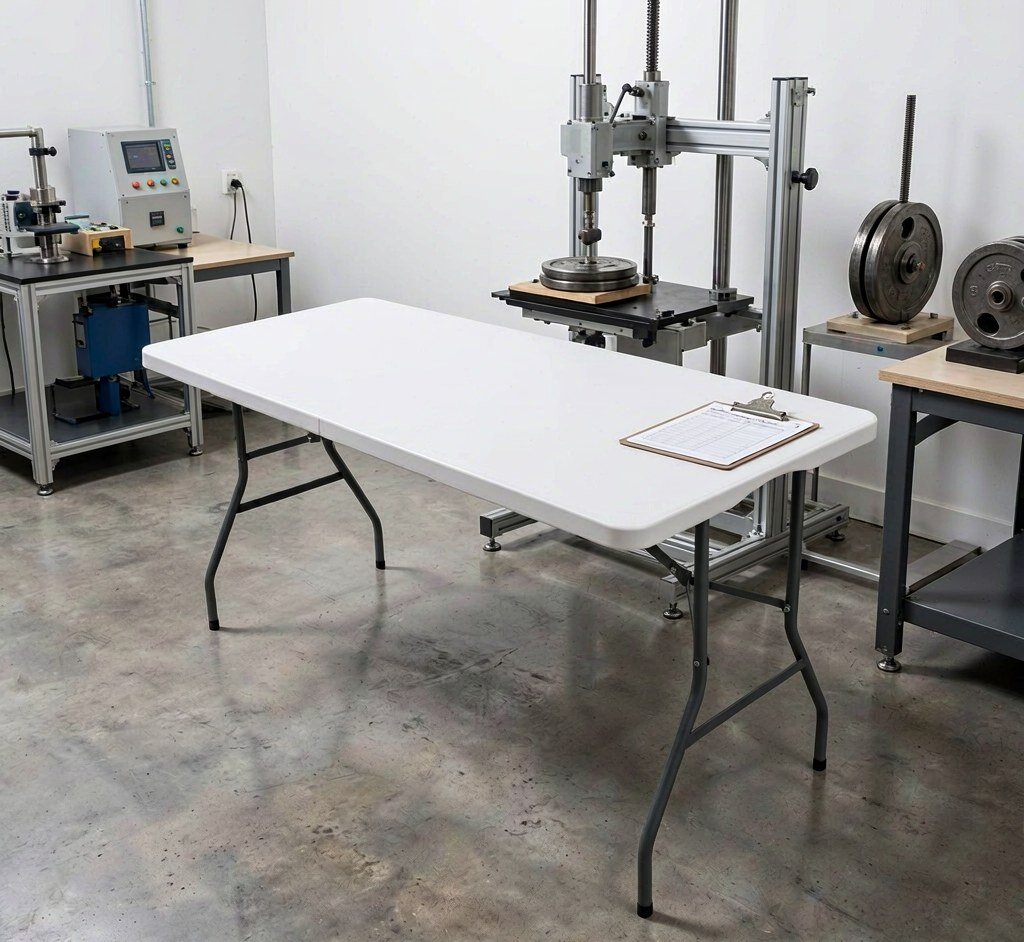
| Static load | 150 kg or more | Which test method produced the number? |
| MOQ | 300 pcs, samples negotiable | What is the lead time for the first order? |
SKYFOLD 6 ft Line: Numbers to Compare Against
Here is how our own sheet reads, line for line. The SF-180 Standard weighs 10.0 kg net, measures 3.5 cm in panel thickness and loads 1,300 pieces into a 40HQ. The Custom Heavy model moves to 3.7 cm and 10.5 kg, while both Premium versions use 4.0 cm panels, weigh 11.1 kg net and load 1,100 pieces. Independent laboratories have tested our panels to EN 581-1:2017 and EN 581-3:2017 at domestic use level (report EFBH25100354-CG-01, per the CEN standard family). For the deeper certification story, see our guide to EN 581 folding table reports.
FAQ
What does “HDPE” mean on a folding table spec sheet?
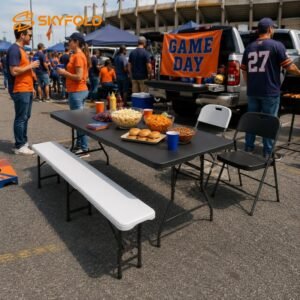
High-density polyethylene, the same resin family used for pipelines and crates. It resists water, most chemicals and temperatures from −60 °C to 80 °C, which explains why outdoor rental fleets prefer it over plywood or MDF tops.
Which spec line predicts table lifespan best?
Panel-and-frame thickness combined with leg wall thickness. A 3.5 cm top on 22 × 1.0 mm legs suits price-driven retail, whereas a 4.0 cm top on 25 × 1.0 mm legs survives rental turnover far longer. For a fuller breakdown, read our folding table weight capacity guide.
What details should I demand before ordering?
Ask for the resin blend, tube diameter with wall thickness, static load with test method, pieces per container, and carton type.
Ready to check a real sheet? Request our 6 ft spec sheet and a sample quotation — MOQ starts at 300 pieces, and standard 40HQ orders ship within 30 days. Browse the full range on our folding tables product page, or send us your target HDPE folding table specification, and we will return a matched sheet within one working day.