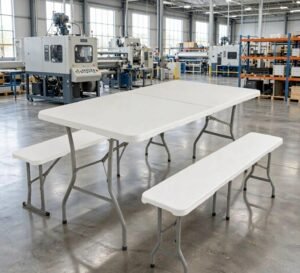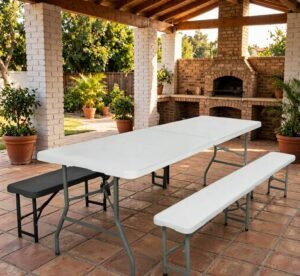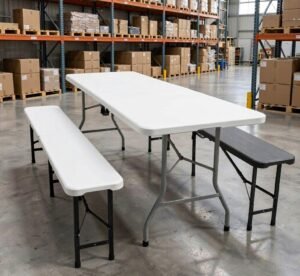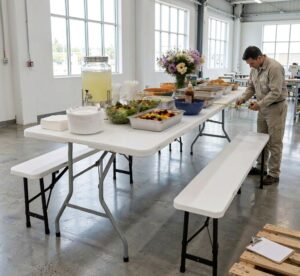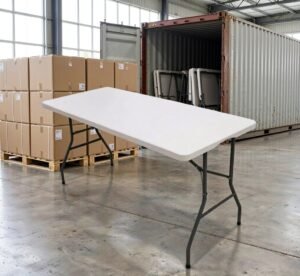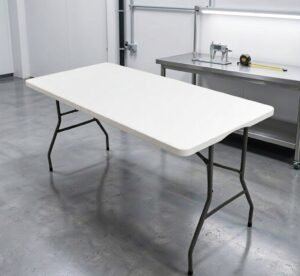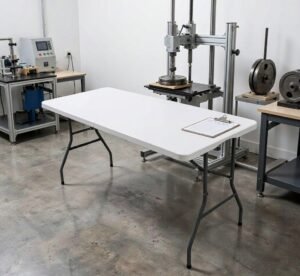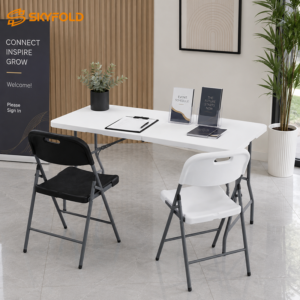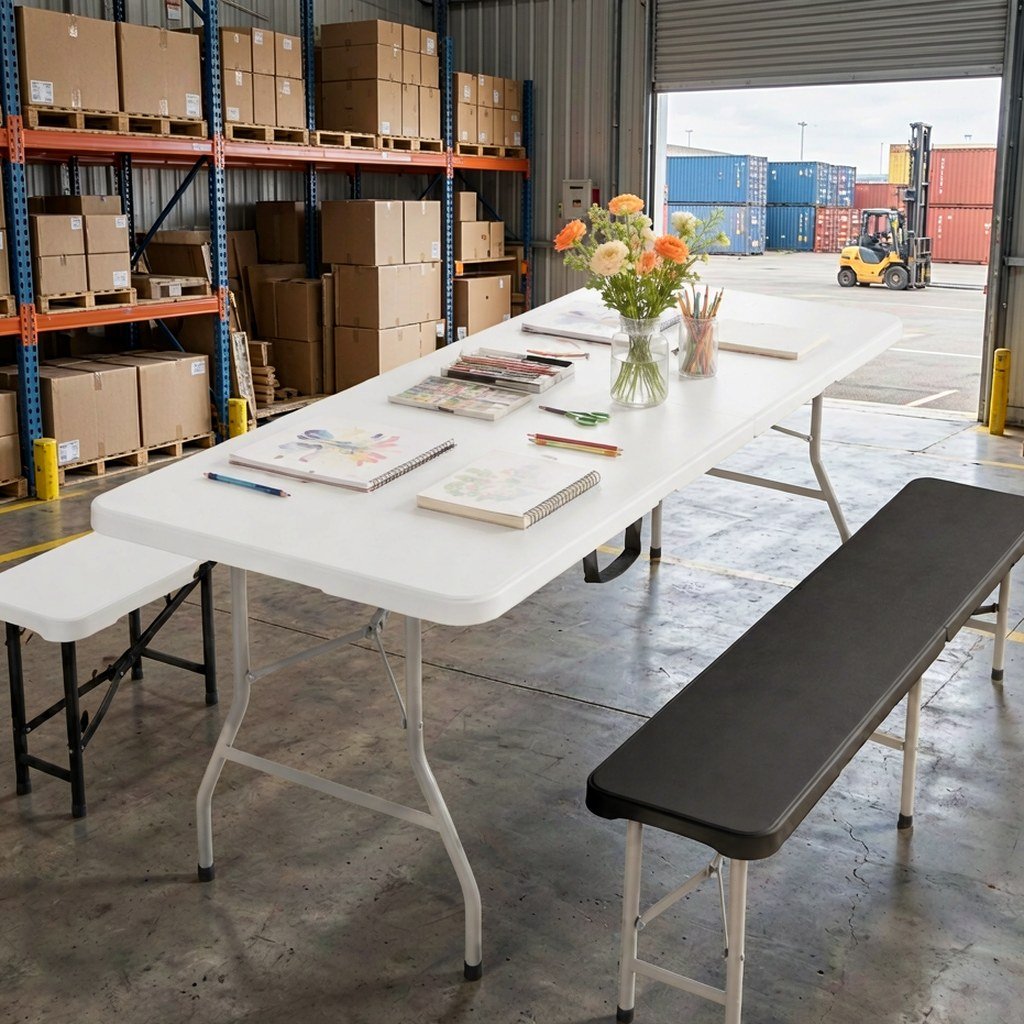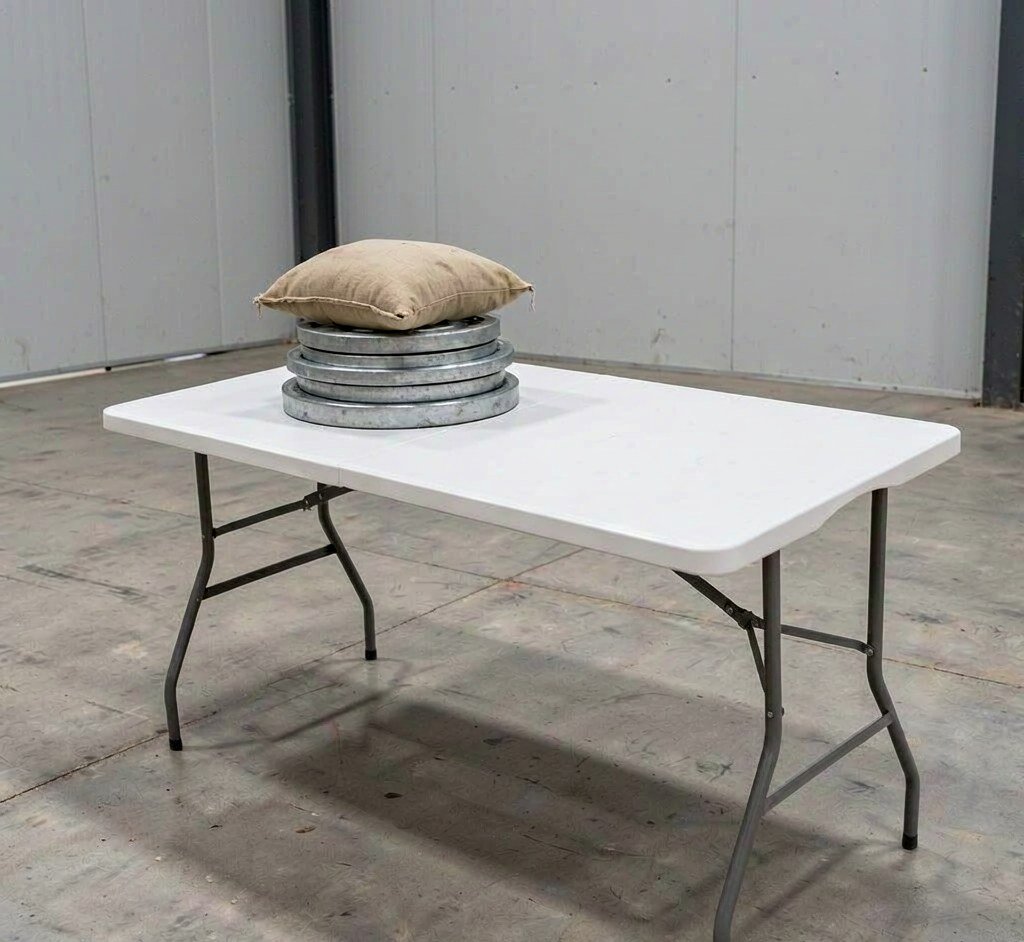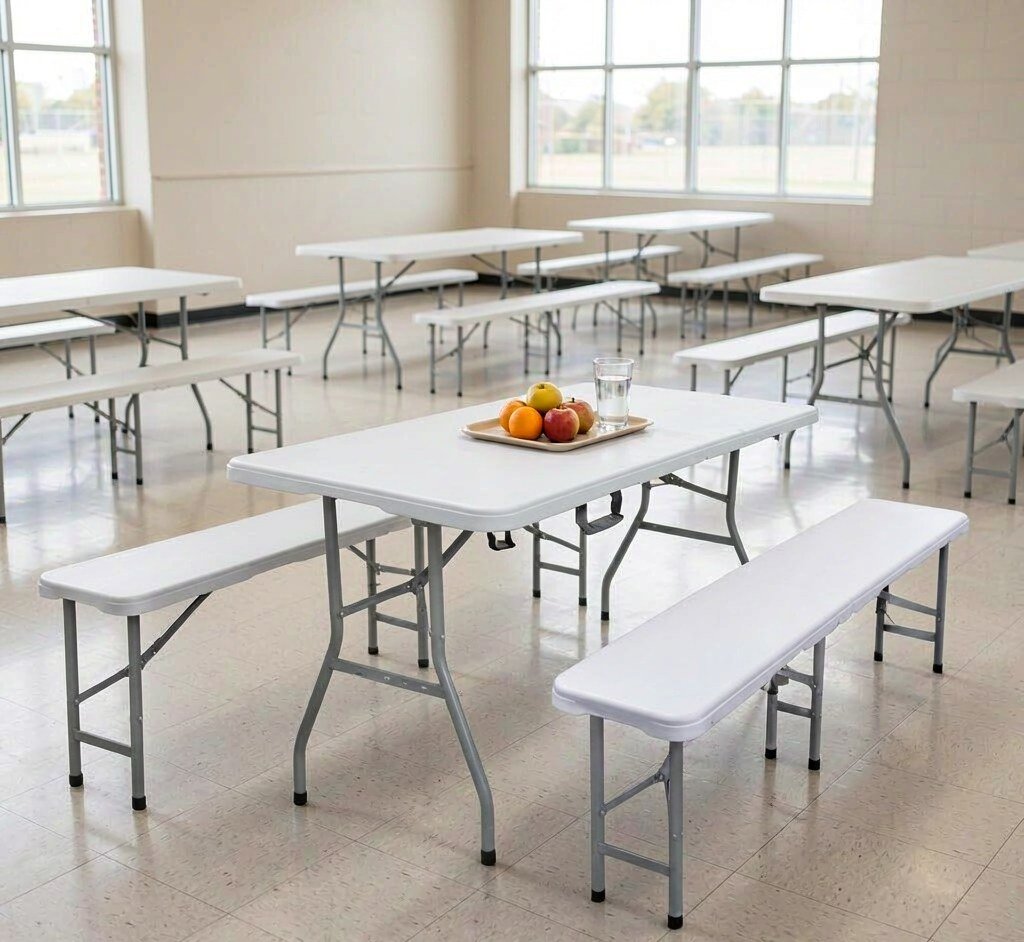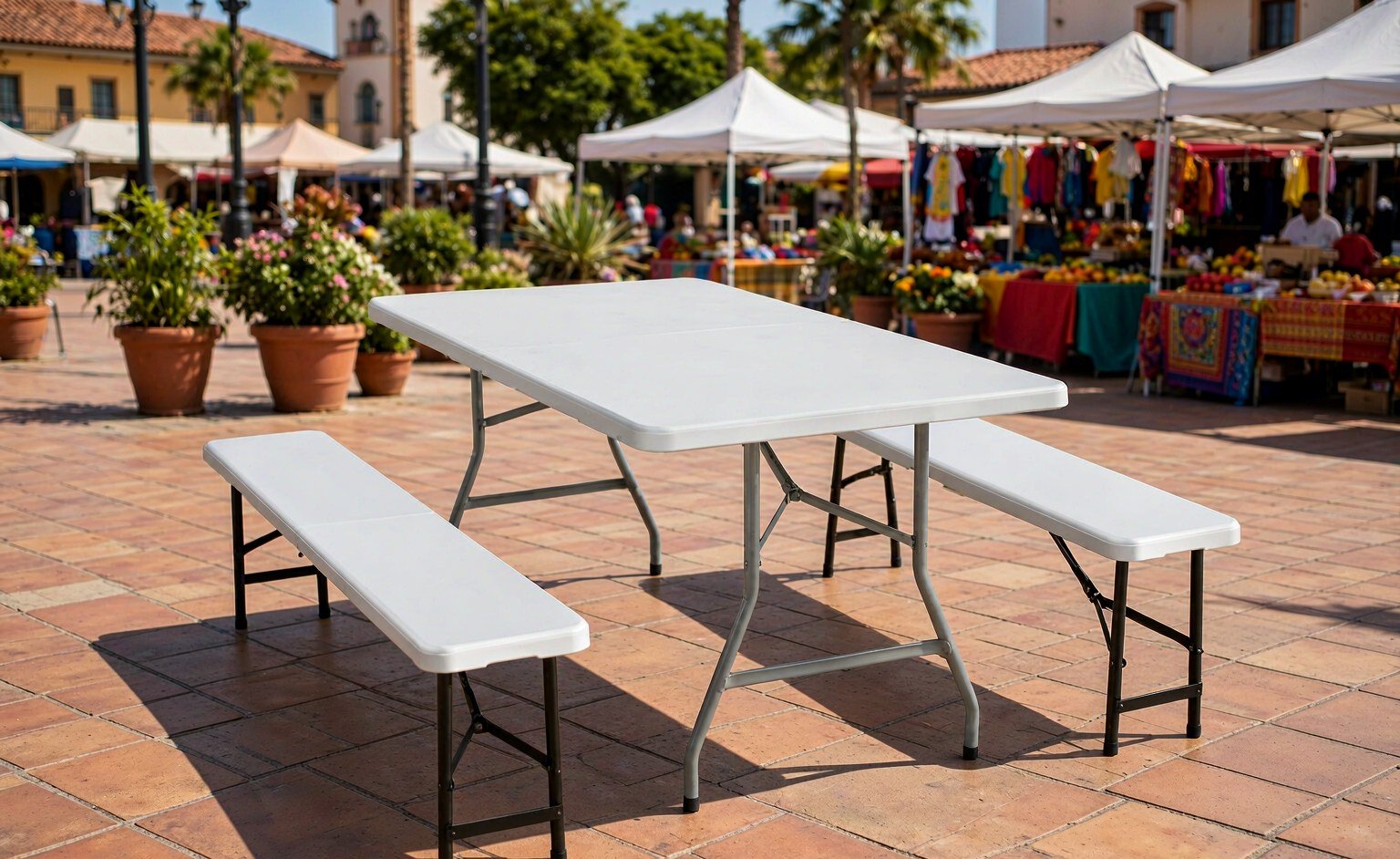
A folding table factory audit verifies what a spec sheet cannot prove: real production capacity, in-process quality control, documented test reports and an export track record. Supplier photo albums answer none of these points. Therefore, buyers who audit on-site catch problems before a deposit leaves their account, not after a container arrives.
SKYFOLD® — Shandong Senrui Home Co., Ltd. — Linyi, Shandong, China — backed by Chanta Group — has exported HDPE folding tables since 2016 and now ships 150–200 × 40HQ containers per month. Those containers leave two self-owned factories, so a single visit covers everything from raw resin to a stacked, palletized carton. In addition, this guide walks through the checkpoints that matter, machine by machine and record by record.
What Should a Folding Table Factory Audit Cover?
A folding table factory audit is a structured, on-site verification of a supplier’s capacity, quality system and compliance documents — not a tour with tea. Firstly, capacity: the machines, molds and floor space that decide whether your peak-season order ships on time. Secondly, process: the inspection points between raw resin and packed carton. Thirdly, paperwork: test reports with traceable numbers. Finally, export history that a freight forwarder or customs record can confirm.
Buyers often overweigh the machine count. In fact, the four areas tell you different things, and a supplier weak in one area usually hides it behind a strong one. Meanwhile, the checklist below keeps a one-day visit objective.
| Audit checkpoint | What to verify | SKYFOLD reference figure |
|---|---|---|
| Blow molding capacity | Machine count and daily output | 13 machines, 5,000+ table tops per day |
| Workshop scale | Floor area and line count | 10,000 ㎡, 6 outdoor furniture lines |
| Frame treatment | In-house anti-rust line | Acid pickling, phosphating, powder coating |
| QC coverage | Inspection stages | Panel + final assembly, two-stage checks |
| Test evidence | Report number and date | EN 581 report EFBH25100354-CG-01, Oct 2025 |
| Delivery record | On-time dispatch | 30 days on a standard 40HQ order |
How Many Machines Prove Real Capacity?
SKYFOLD’s Zaozhuang plant in Shandong runs 13 large blow molding machines backed by more than US$2 million of equipment investment, inside a 10,000 ㎡ workshop with 6 outdoor furniture production lines. That line-up turns out over 5,000 HDPE table tops per day. Consequently, a standard 40HQ order dispatches within 30 days, and the classic 1.8 m model ships in as fast as 15 days.
However, counting machines proves little on its own. Ask which molds the line runs today, watch one changeover, and confirm the frame treatment sits in-house: acid pickling, phosphating and electrostatic outdoor powder coating — the process that keeps 22 × 1.0 mm steel legs from rusting in coastal humidity. By contrast, a supplier that outsources rust protection rarely explains it in detail.
Which Documents Matter More Than Photos?
Ask for report numbers, not certificates that are “available on request”. SKYFOLD’s 6 ft model DS-CZ180 passed EN 581-1:2017 and EN 581-3:2017 at domestic use level under report EFBH25100354-CG-01, dated 24 October 2025, tested by Eurofins; CEN publishes the standard itself. Moreover, the company holds an SGS Trade Assessment (report 493651876_T, valid to 29 June 2027), so you can verify it online instead of taking it on faith.
Pre-shipment evidence matters just as much. Every SKYFOLD shipment leaves with a PSI report built on AQL Level II sampling — Critical 0, Major 2.5, Minor 4.0 — in line with ISO 2859-1. For example, an inspection on 25 August 2026 in Shandong covered order ITEM 587, 8,220 cartons, and closed with a Pass result plus a QC video.
How Do You Verify Quality Between Resin and Carton?
Walk the line in production order. SKYFOLD inspects at two stages — panel production and final assembly — through an independent QC team, and workers filter defective units out before packing. Afterwards, ask to see one inspection record from a live order, not a staged binder; a genuine record shows today’s date and a real item code.
Then test the product claims yourself on the sample bench. The 6 ft benchmark measures 180 × 74 × 74 cm and carries a 150 kg+ static load rating, with panel thickness options of 3.5, 3.7 and 4.0 cm across the SF-180 range. Before you approve anything, cross-check the frame against SKYFOLD’s table and chair structure guide, and shortlist the SKUs to sample from the SKYFOLD folding table product range.
Ready to Run Your Own Audit?
A one-day visit to the Zaozhuang or Ningbo plant covers every checkpoint above, and remote buyers can request a live video walkthrough plus the same document pack. In short, book the folding table factory audit first, and let the findings — not the brochure — set your order terms. SKYFOLD accepts small sample batches ahead of the 300-piece MOQ, so you validate before you scale.
Planning to resell in Latin America? Then compare notes with the HDPE folding furniture distributors in South America guide, and hand your after-sales team the outdoor furniture care and safety guide. Both pair naturally with an audit file when you brief new channel partners.
How long does a folding table factory audit take?
One day on-site covers the blow molding hall, the frame line and the QC records at a mid-size plant. For remote audits, plan a two-to-three-hour live video walkthrough plus a document review.
Can I audit a Chinese folding table factory without traveling?
Yes. Combine a third-party inspection visit with a live video walkthrough, verify the SGS report number online, and request a PSI report from a current order rather than a prepared one.
Which capacity numbers should a real folding table factory show?
Look for machine count plus output, for instance 13 blow molding machines producing 5,000+ table tops per day, monthly shipments of 150–200 × 40HQ containers, and a 30-day dispatch record on standard 40HQ orders.