
Strategic Risk Management in High-Volume Furniture Sourcing
When sourcing high volumes of a standard 6ft plastic folding table, corporate purchasing teams must partner with a supplier that understands global compliance. Partnering with a low-tier workshop that lacks export credentials can lead to severe delays at customs, costly demurrage fees at ports, and outright cargo seizures. This conversion guide breaks down how to navigate international trade barriers, utilize flexible payment financing, and select an asset-heavy manufacturer capable of protecting your global supply chain stability.
For international procurement directors, supply chain strategists, and enterprise-level e-commerce network operators, executing a bulk purchase contract is a complex logistical operation. In an era marked by shifting trade policies, fluctuating ocean freight rates, and strict customs enforcement, looking only at the initial factory FOB price is a major blind spot. Maximizing your return on investment (ROI) requires a comprehensive approach that accounts for customs compliance, international legal documentation, and localized trade barriers.
Customs Compliance: Passing Global Regulatory Barriers with Ease
Entering strict retail and wholesale markets across North America, Europe, and South America requires strict adherence to international legal frameworks. Major commercial purchasing organizations and hypermarket buyers like JYSK, Carrefour, ALLHOME, and SODIMAC cannot accept uncertified cargo onto their logistics networks. Working with an experienced hdpe folding table manufacturer that has operated a dedicated international trade division since 2016 ensures that your customs documentation is executed flawlessly on the first attempt.
A professional factory trade infrastructure provides full compliance data, ensuring your shipments hold proper international verifications such as ISO9001:2015 (GB/T19001-2015), BSCI social audits, and European EN581 structural safety certifications. These legal documents give customs brokers and port authorities clear verification that your cargo meets premium environmental and mechanical guidelines, allowing for fast customs clearance and eliminating unexpected regulatory bottlenecks at the destination port.
| Supply Chain Risk Factor | Trading Storefront / Low-Tier Workshop | Skyfold Enterprise Factory Standard | Direct Financial Advantage for Importers |
|---|---|---|---|
| Customs Documentation Error | High risk; unverified H.S. codes and incomplete certificates | 50-person expert trade team; 100% compliance audit | Zero customs delays; eliminates costly port demurrage fees |
| Anti-Dumping Tariff Protection | No legal strategy; leaves buyers vulnerable to high tariffs | Transparent H.S. code classification & regulatory alignment | Protects profit margins from sudden international trade changes |
| Transit Packaging Breakdown | Standard weak cartons; prone to high damage and return rates | ISTA-3A mail-order boxes with dense pearl cotton lining | Reduces final last-mile transit damage claims to 0% |
| Capital Constraints / Cash Flow | Strict 100% upfront T/T or rigid L/C required for every run | OA 30/60 Days extended credit for qualified long-term partners | Allows distributors to generate local revenue before paying invoices |
Mitigating E-Commerce and Retail Risks via Industrial Packaging
For high-volume digital brands and Amazon FBA operators, supply chain risk extends all the way to the consumer’s front door. If a product arrives with a bent steel leg or a cracked plastic edge due to rough courier handling, your brand suffers immediate financial and reputational harm. As analyzed in our logistics guide concerning blow molded folding table packaging standards, standard boxes used by small traders fail during last-mile courier transit trials.
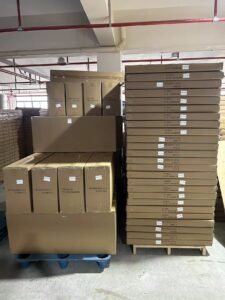
To eliminate product returns, enterprise buyers must require an upgraded mail order packaging standard. This setup reinforces the heavy-duty five-layer corrugated carton by inserting thick pearl cotton lining, shock-absorbing foam strips, and hardened corner guards on all edges. This engineering ensures the package survives strict ISTA-3A drop testing protocols, protecting premium models like the SF-180E2 (featuring a 4cm robust panel thickness and an 11.1kg stable net weight) throughout the entire cross-border delivery process.
Financial Engineering: Utilizing Advanced Credit Terms to Scale
Managing liquid working capital is a critical challenge for growing distributors during peak seasonal buying waves. While standard initial import contracts operate on a traditional 30% advance deposit followed by a 70% T/T balance payment against the Bill of Lading (B/L) copy, rigid payment terms can strain a company’s cash flow when ordering multiple containers simultaneously to meet sudden supermarket promotions.
To support corporate scaling, elite manufacturing organizations backed by an industrial foundation operating since 1997 can provide advanced financial support. For verified long-term B2B partners who pass background credit evaluations, factories can extend Open Account (OA) payment privileges for 30 or 60 days. This financial flexibility allows major importers to clear customs, distribute container loads to local retail networks, and collect regional wholesale revenue before settling the final factory invoice, significantly optimizing cash flow dynamics.
Cross-Group Validation: Strategic Sourcing Logistics Optimization
True supply chain efficiency requires a balance between logistical protection and smart container space utilization. A failure to calculate exact loading metrics leads to wasted container volume and higher freight costs per unit. As detailed in our comprehensive analysis of bulk sourcing folding tables, volume procurement benefits immensely from multi-SKU mixed container loading, which allows buyers to combine 3 to 4 distinct models—such as heavy-duty folding benches, round banquet models, and custom colorways—within a single 40HQ container.
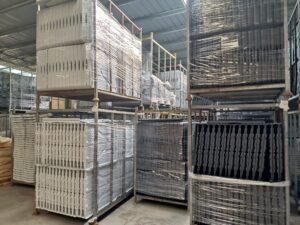
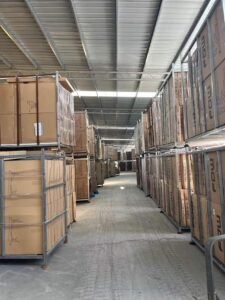
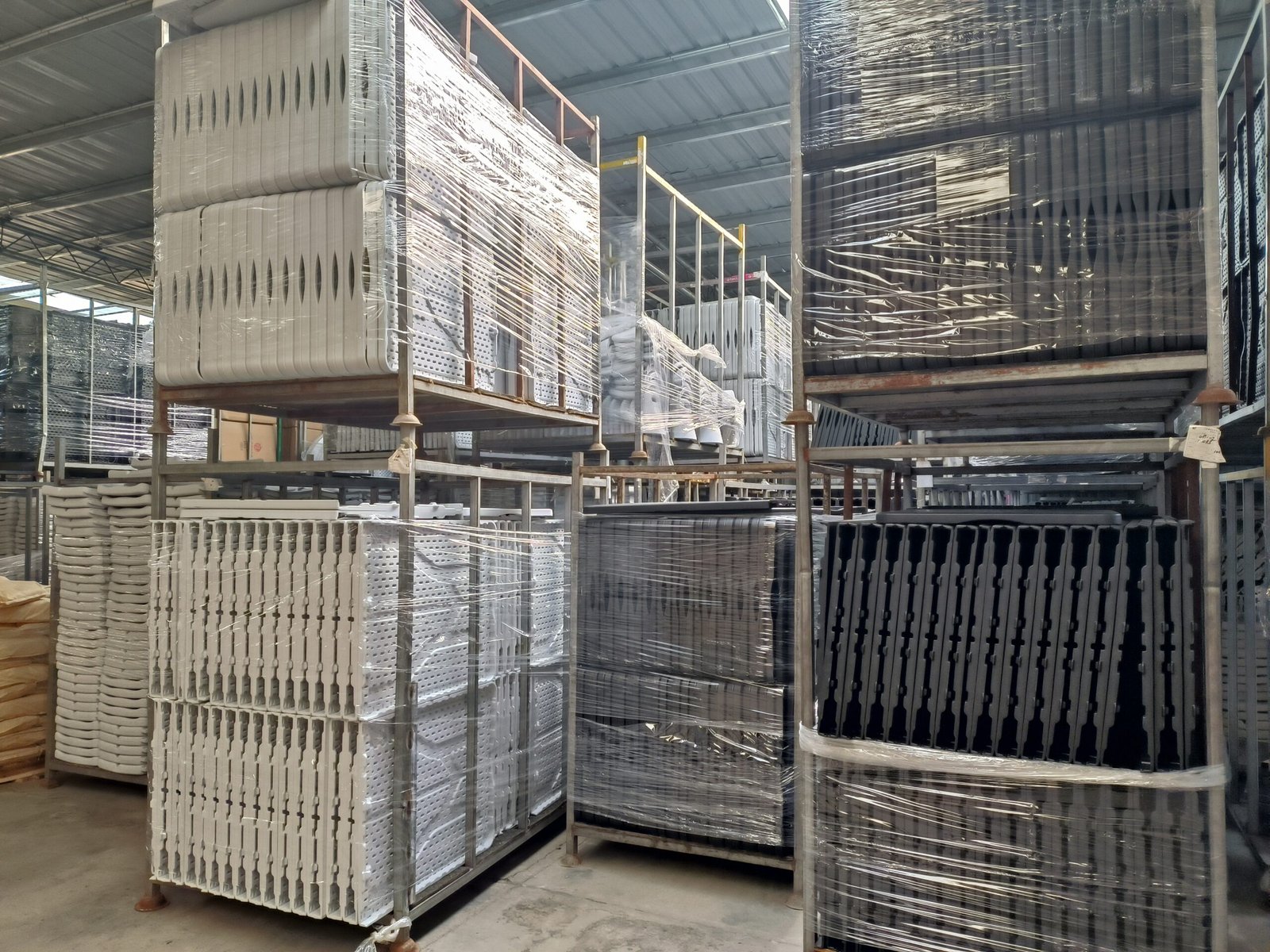
This flexible loading capability is supported by an asset-heavy factory scale spanning 2 self-owned production facilities operating 6 automated production lines. Generating a reliable monthly capacity of 150,000 units ensures that whether you run a single-model volume promotion or a mixed-catalog product rollout, your inventory remains consistently stocked. This immense infrastructure, yielding over 20 million USD in annual exports, is the operational foundation that guarantees a stable 25 to 30-day delivery window throughout high-demand market cycles.
Conclusion: Securing a Highly Profitable Global Supply Chain
Optimizing an international furniture supply chain requires moving past basic unit prices to evaluate real factory infrastructure, strict international certifications, and advanced packaging protection. Concentrating your procurement focus on highly efficient, fully audited production facilities ensures your company can secure large-scale institutional contracts, unexpected mass retail rollouts, and rapid e-commerce expansion campaigns without facing logistical delays or product defects.
By enforcing these strict customs documentation standards, ISTA-3A protective packaging rules, and flexible financial credit terms during your next purchasing cycle, you protect your enterprise from cross-border shipping volatility. Aligning your wholesale business with an undisputed industry leader guarantees factory-direct pricing, stable volume execution, and premium material durability that satisfies both consumers and corporate retail executives. Finalize your purchase order specifications today, secure your container layout, and command the global marketplace with the dependable utility your buyers trust year after year.